
Top 10 Water Cooled Condenser Manufacturers Worldwide

Choosing among the Top 10 Water Cooled Condenser Manufacturers Worldwide requires more than comparing catalog prices. A condenser may look impressive in a brochure, yet struggle when cooling water carries sediment, salts, or biological growth. Real performance appears inside the plant room, beside vibrating pumps and stained pipework.

Dr. Michael K. Witte, a respected refrigeration engineer, has said, “A condenser is only as efficient as the system around it.” This practical observation deserves attention. A reliable Water Cooled Condenser must match the compressor, refrigerant, cooling tower, water treatment plan, and operating climate. Manufacturers should therefore be assessed through measurable evidence, including heat-transfer performance, corrosion resistance, maintenance access, pressure ratings, and documented energy use.

This guide examines leading global manufacturers through those practical lenses. It considers shell-and-tube, brazed plate, and other common designs. It also reviews customization, factory testing, technical support, spare-parts availability, and long-term operating costs. These details matter when a fouled tube bundle can reduce capacity during the hottest production shift.

Not every “top” manufacturer is ideal for every facility. That is the uncomfortable part. A premium brand can still disappoint when installation is poor or water chemistry is ignored. Conversely, a less famous supplier may deliver excellent results in a carefully managed system. The ranking should be treated as a useful starting point, not an unquestionable verdict. Performance data, service records, and site-specific engineering must have the final word.
Top 10 Water Cooled Condenser Manufacturers Worldwide

Water-Cooled Condensers: Function, Design, and Industrial Applications

Top 10 Water Cooled Condenser Manufacturers Worldwide

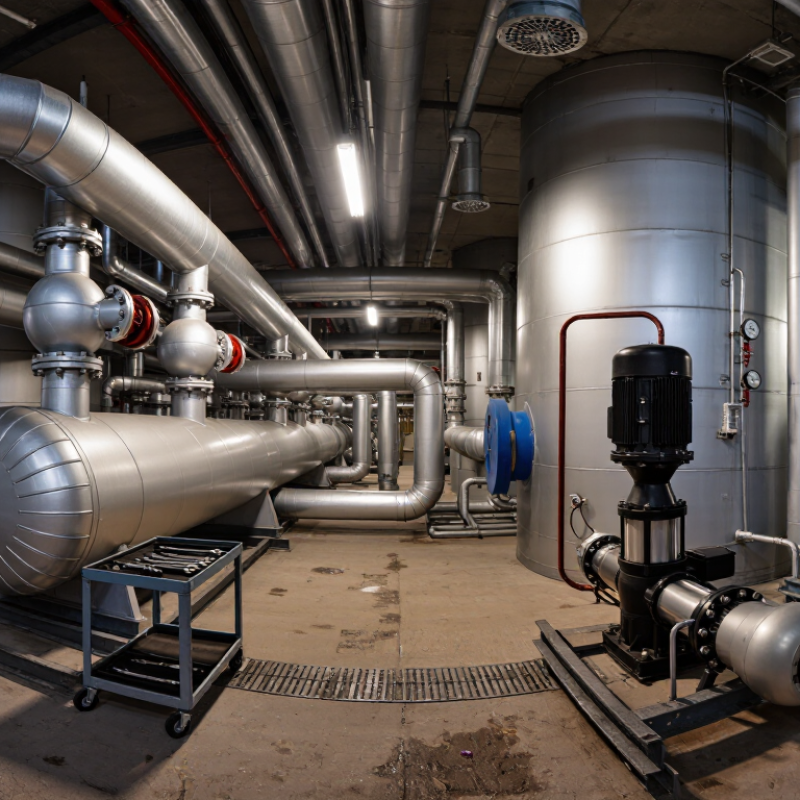
Water-cooled condensers transfer heat from refrigerant vapor into circulating water. This process condenses vapor into liquid and supports efficient refrigeration cycles. In industrial inspections, technicians often find performance problems near dirty tubes, weak water flow, or incorrect controls. Small details matter.

A typical unit uses a shell-and-tube or plate design. Copper, stainless steel, and titanium suit different water qualities and operating conditions. Tube diameter, fouling allowance, pressure drop, and cooling-water temperature affect capacity. These condensers serve chillers, process cooling systems, power facilities, food plants, and chemical production lines. Selection should follow verified capacity data, material certificates, pressure ratings, and service records. A larger condenser is not always better. Oversizing can increase cost and reduce control stability.

Tips: Check water chemistry before choosing materials. Inspect tube surfaces regularly. Measure inlet and outlet temperatures during operation. Compare actual flow with the design value. Ask manufacturers for tested performance curves, maintenance guidance, and evidence of quality control. Site conditions can expose weaknesses that laboratory data misses. A perfect design rarely exists; even experienced engineers may revise the specification after reviewing seasonal temperatures, fouling patterns, and available maintenance skills.

Criteria for Evaluating Global Condenser Manufacturers

Top 10 Water Cooled Condenser Manufacturers Worldwide

Choosing among the top 10 water cooled condenser manufacturers requires more than comparing prices. Start with operating experience in your industry, climate, and water conditions. A condenser handling coastal air needs different protection than one installed inland. Review project records, material choices, and documented performance under similar loads. Ask for measured heat-transfer data, pressure-drop figures, and cleaning intervals. Claims without test conditions deserve caution.

Technical capability should include tube design, corrosion resistance, control compatibility, and inspection quality. Reliable manufacturers explain how their units perform during peak demand and partial-load operation. Check factory testing, quality systems, safety compliance, and traceable materials. Independent certifications can support credibility, but they should not replace practical evidence. Service capacity also matters. Spare parts, technician response, and clear maintenance instructions can prevent costly downtime. A strong product with weak support is still a risk.

Tips: Request references from comparable facilities. Examine warranty terms carefully. Ask how fouling is measured. Review total lifecycle cost, not only purchase price. If possible, visit a production site or witness testing before approval. Perfect information is rarely available. My own evaluation would still leave room for doubt, especially when water quality changes seasonally. An honest manufacturer should identify these limits instead of promising constant efficiency.

Profiles of the Top 10 Water-Cooled Condenser Manufacturers

The leading water-cooled condenser manufacturers serve different industrial priorities. One specializes in shell-and-tube units for refineries and chemical plants. Another focuses on compact plate condensers for commercial refrigeration. A third builds heavy-duty systems for marine engines, using corrosion-resistant alloys and reinforced tube sheets. Their designs reflect real operating conditions, not just catalog ratings.

A fourth manufacturer develops custom condensers for power stations, where vacuum stability and heat-transfer performance matter daily. The fifth supplies modular units for food-processing facilities, with smooth surfaces that simplify cleaning. A sixth concentrates on geothermal applications and studies mineral scaling before selecting materials. The seventh produces air-conditioning condensers for hospitals and large buildings. Quiet operation is important there. The eighth combines digital monitoring with conventional mechanical protection, helping maintenance teams identify fouling early.

The ninth profile represents a manufacturer known for retrofit engineering. Its specialists measure existing pipework, pump capacity, and available floor space before proposing replacements. That practical approach can prevent expensive installation changes. The tenth focuses on export-ready equipment, with clear documentation, pressure testing, and service guidance for overseas technicians. These manufacturers often publish thermal data, material specifications, and inspection procedures. Buyers should still verify every claim through drawings, test records, and reference projects. No supplier is perfect. A strong condenser may still underperform when water quality, flow rate, or maintenance receives little attention. Experience at the site level remains decisive.

Comparison of Product Features, Technologies, and Market Coverage

Water-cooled condenser manufacturers differ sharply in design priorities, not just production scale. Leading suppliers commonly offer shell-and-tube, brazed-plate, and evaporative condenser systems. Shell-and-tube models suit large industrial plants. Brazed-plate units save space and transfer heat efficiently. Evaporative designs can reduce water and energy demand in suitable climates.

Product comparison should examine materials, operating pressure, fouling resistance, and service access. Copper alloys provide strong thermal performance, while stainless steel often handles harsher water conditions. Titanium may serve demanding coastal or chemical environments, but its purchase cost is higher. Removable tube bundles simplify inspection. Automated controls can adjust condenser water flow as loads change. Small details matter.

Technology claims still require practical testing. A higher efficiency rating may depend on clean water, stable temperatures, and skilled maintenance. Some suppliers provide remote monitoring, digital diagnostics, and modular replacement parts. Others focus on rugged construction and local service teams. Market coverage also varies. Large manufacturers may support projects across several continents, while regional producers often respond faster and understand local water quality. That trade-off deserves attention.

From field experience, maintenance access can matter more than brochure efficiency. Sediment, scaling, and uneven water treatment can reduce performance within one operating season. I may overvalue serviceability because downtime is costly, but neglected condensers rarely reward optimistic specifications. Buyers should compare verified test data, warranty terms, spare-part availability, and technician response times before selecting a supplier.

Top 10 Water Cooled Condenser Manufacturers Worldwide - Comparison of Product Features, Technologies, and Market Coverage
Rank Manufacturer Profile Primary Product Types Typical Cooling Capacity Range Heat-Transfer Tube Materials Common Refrigerants Design Technologies Energy-Efficiency Features Typical Operating Pressure Applicable Standards Typical Applications Market Coverage Customization Capability
1 Global Profile 01 Shell-and-tube; brazed plate; evaporative condenser systems Approximately 50–5,000 kW Copper, copper-nickel, stainless steel, titanium R134a, R513A, R410A, R32, ammonia, CO₂ Counter-flow circuits, removable tube bundles, optimized water boxes Low-pressure-drop water circuits; variable-speed pumping compatibility Typically 10–30 bar, depending on refrigerant and design ASME, PED, EN 13445, AHRI-related test practices Industrial refrigeration, chillers, process cooling, data centers Worldwide distribution with established service networks High
2 Global Profile 02 Shell-and-tube condensers; seawater-resistant condenser packages Approximately 100–4,000 kW Copper-nickel, titanium, duplex stainless steel HFCs, HFO blends, ammonia, CO₂ Enhanced tube surfaces, multi-pass flow arrangements, sacrificial anode options Reduced fouling design; condenser-water temperature optimization Typically 12–28 bar PED, ASME Section VIII, ISO 9001 production controls Marine cooling, coastal facilities, commercial HVAC, district cooling Global coverage with strong marine and coastal-market presence High
3 Global Profile 03 Plate-and-frame; brazed plate; gasketed heat exchangers Approximately 20–2,500 kW Stainless steel plates with copper, nickel, or stainless brazing R134a, R513A, R290, R32, glycol-water mixtures Asymmetric plate patterns, turbulent-flow channels, compact modular construction High heat-transfer coefficient; low refrigerant charge; compact footprint Typically 10–45 bar CE/PED, ASME, AHRI certification where specified Heat pumps, commercial chillers, process cooling, refrigeration skids Strong coverage in Europe, Asia-Pacific, and North America Medium–High
4 Global Profile 04 Evaporative condensers; induced-draft and forced-draft systems Approximately 200–10,000 kW Galvanized steel, stainless steel, copper, coated carbon steel Ammonia, CO₂, HFCs, HFO blends Adiabatic pre-cooling, axial fans, spray-water distribution systems Lower condensing temperatures; fan-speed control; water-saving controls Typically 10–30 bar IIAR guidance, ASHRAE practices, CE/PED, regional safety codes Cold storage, food processing, logistics, large industrial refrigeration Worldwide industrial coverage with regional installation partners High
5 Global Profile 05 Shell-and-tube; compact condenser modules; flooded condensers Approximately 75–3,500 kW Copper, copper-nickel, stainless steel, titanium R410A, R407C, R134a, R513A, ammonia Flooded or falling-film configurations, high-efficiency tube layouts Low approach-temperature design; electronic expansion-valve integration Typically 10–32 bar ASME, PED, EN 378, ISO quality-management requirements Water-cooled chillers, industrial HVAC, process-temperature control Broad commercial coverage across the Americas, Europe, and Asia Medium–High
6 Global Profile 06 Brazed plate; welded plate; hybrid plate-and-shell condensers Approximately 10–1,800 kW Stainless steel, titanium, nickel-alloy options R290, R32, R454B, R513A, CO₂ Laser-welded channels, compact plate packs, refrigerant-side optimization Low refrigerant inventory; high turbulence; reduced installation volume Typically 16–45 bar CE/PED, ASME, UL-recognized components where required Heat pumps, light commercial refrigeration, industrial heat recovery Strong regional coverage with growing international exports Medium
7 Global Profile 07 Shell-and-tube; dry-cooler-assisted condenser packages Approximately 100–6,000 kW Copper, copper-nickel, stainless steel, coated steel R134a, R407C, R410A, ammonia, HFO blends Parallel circuiting, automatic tube cleaning, integrated water treatment interfaces Variable-flow control; fouling monitoring; optimized condenser-water reset Typically 10–30 bar ASME, PED, EN 13445, local pressure-equipment regulations District cooling, commercial buildings, industrial utilities Wide coverage in mature HVAC and industrial markets High
8 Global Profile 08 Plate-and-frame; semi-welded plate; hygienic heat exchangers Approximately 25–3,000 kW Stainless steel, titanium, nickel alloys R134a, R513A, R1234ze, ammonia, glycol solutions Wide-gap channels, removable plates, food-grade gasket options High heat recovery potential; low water-side pressure loss Typically 10–40 bar EHEDG-related hygienic design practices, PED, ASME Food and beverage, pharmaceutical processing, heat recovery, HVAC International coverage with strong process-industry penetration High
9 Global Profile 09 Shell-and-tube; compact air-conditioning condensers Approximately 30–1,500 kW Copper, copper-nickel, stainless steel R410A, R32, R134a, R407C, R513A Compact tube bundles, optimized baffles, vertical and horizontal mounting Reduced water pressure drop; compatibility with variable-speed drives Typically 10–25 bar CE/PED, ASME, EN 378, regional HVAC requirements Packaged chillers, commercial air conditioning, building services Strong presence in regional HVAC distribution channels Medium
10 Global Profile 10 Custom shell-and-tube; plate condensers; process heat exchangers Approximately 50–8,000 kW Carbon steel, stainless steel, copper-nickel, titanium Ammonia, CO₂, HFCs, HFOs, hydrocarbons Computerized thermal sizing, custom nozzle layouts, corrosion-resistant coatings Application-specific flow optimization; heat recovery integration Typically 10–50 bar ASME Section VIII, PED, TEMA, API-related practices where applicable Power generation, petrochemical, industrial refrigeration, marine systems Project-based international coverage through engineering contractors Very High

Comparison basis: typical published design ranges and commonly specified technologies for water-cooled condenser systems. Actual capacity, pressure, materials, refrigerant compatibility, certifications, and regional availability depend on the selected model and project requirements.

Selection Considerations for Different Cooling Requirements

Top 10 Water Cooled Condenser Manufacturers Worldwide

Selecting a water cooled condenser starts with the real cooling load, not the catalog capacity. Record peak load, entering water temperature, condenser-water flow, and seasonal operating hours. A unit sized only for the hottest afternoon may operate inefficiently for most of the year. The IEA’s The Future of Cooling report projects global space-cooling energy demand could more than triple by 2050. Efficiency deserves serious attention. Look for low approach temperature, stable part-load performance, and accessible tube cleaning. Field experience also shows that fouling can quietly reduce heat transfer. This is often overlooked.

Water quality changes the decision. Hard water may require corrosion-resistant materials, filtration, or automatic blowdown control. Coastal sites need stronger protection against salt exposure. A closed-loop system can reduce contamination, but it may increase installation complexity. The U.S. Department of Energy reports that cooling can represent about 40% of electricity use in commercial buildings. Therefore, compare annual energy consumption, not only the purchase price. Check sound limits, footprint, pump energy, refrigerant compatibility, and local service capability. A perfect specification on paper can still fail operationally.

Tips: Ask for performance data at several load points. Verify the test standard and measurement conditions. Inspect cleaning access before purchase. Review five years of water and maintenance costs. Do not assume the largest condenser is safest; oversizing may create unstable control and unnecessary expense. Reconsider the design after one operating season.

keep me informed

Subscribe

By clicking SEND means that you agree to our Terms & Conditions, Privacy and Cookie Policies.