
What Is Molybdenum Round Rod Used For?
molybdenum round rod is valued where ordinary metals soften, distort, or react under severe heat. Its melting point is about 2,623°C, and it maintains useful strength in many high-temperature environments. Manufacturers use it for furnace components, heating supports, electrodes, pins, shafts, and precision fixtures. It also appears in semiconductor processing, glass manufacturing, vacuum equipment, and specialized aerospace systems.
In a vacuum furnace, a molybdenum round rod may support heavy parts during sintering. Its low thermal expansion helps maintain alignment as temperatures rise and fall. In glass production, molybdenum electrodes can conduct current while resisting molten glass better than many conventional metals. Its clean surface and predictable dimensions also matter in controlled manufacturing areas. Small differences in diameter can affect fit, electrical performance, and heat distribution.
However, molybdenum is not a universal solution. It can oxidize rapidly at elevated temperatures in air, so designers often specify vacuum, hydrogen, or another controlled atmosphere. Machining also requires care because incorrect cutting conditions may damage the surface or create stress. Grade selection, purity, diameter, straightness, and finish should match the operating conditions. This part is sometimes underestimated.
Reliable suppliers provide mill certificates, dimensional inspection, and traceability for demanding applications. Engineers should also review load, temperature, atmosphere, and joining methods before selecting a rod. The best use of molybdenum round rod depends on the complete system, not simply its impressive heat resistance. Performance claims should be verified through testing, especially when service conditions vary.
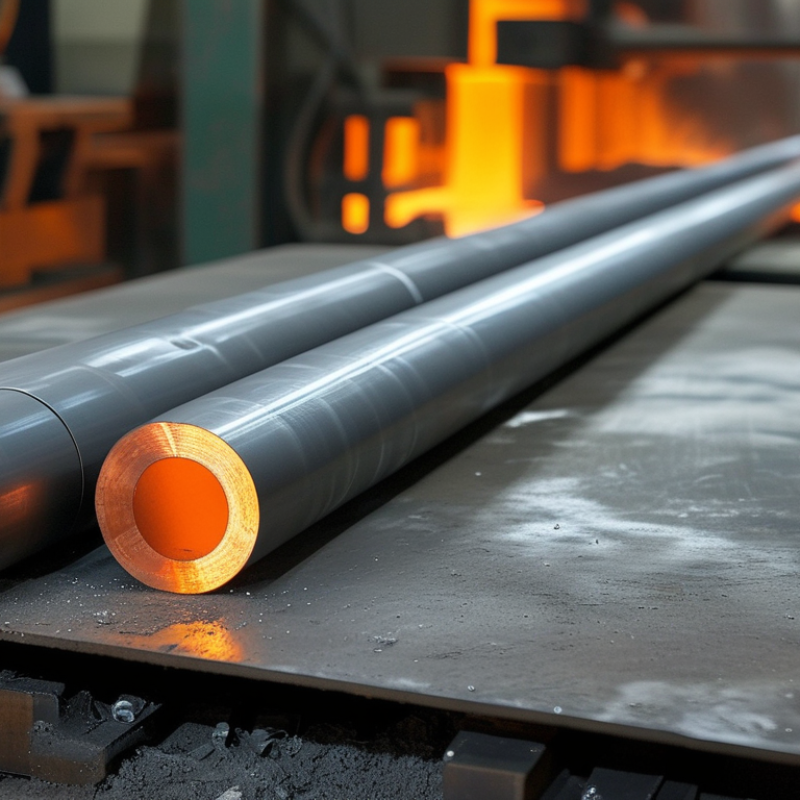
Definition and Key Properties of Molybdenum Round Rods
What Is Molybdenum Round Rod Used For?
Molybdenum round rods are solid, cylindrical parts made from a refractory metal. NIST Chemistry WebBook lists molybdenum’s melting point at about 2,623°C. Its density is approximately 10.28 g/cm³, while thermal conductivity reaches about 138 W/m·K near room temperature. These properties help the rod retain strength and dimensional stability during severe thermal cycling. The material also has a low thermal expansion coefficient, close to 4.8 × 10⁻⁶/K. That matters when a furnace fixture must remain aligned after repeated heating and cooling.
In practice, manufacturers use molybdenum rods for furnace supports, heating assemblies, electrodes, mandrels, and high-temperature tooling. They are also machined into pins, shafts, and fasteners for vacuum or inert-atmosphere equipment. The U.S. Geological Survey’s Mineral Commodity Summaries 2025 estimated global molybdenum mine production at about 260,000 metric tons in 2024. This figure reflects continuing industrial demand, especially from alloy, energy, and high-temperature applications. Yet the rod is not perfect. It can be brittle at room temperature, difficult to machine, and vulnerable to oxidation in hot air. Engineers therefore select grain structure, purity, diameter, and surface condition carefully. A polished rod may perform well in a controlled furnace but fail early in an exposed oxidizing zone. Small design details matter.

How Molybdenum Round Rods Are Manufactured
What Is Molybdenum Round Rod Used For?
How Molybdenum Round Rods Are Manufactured
Molybdenum round rods usually begin as refined molybdenum oxide powder. Hydrogen reduction converts the oxide into metallic powder. The powder is then pressed into compact bars. Controlled sintering bonds the particles under high temperature. Swaging, rolling, or drawing increases density and improves roundness. Intermediate annealing reduces internal stress. Final grinding or centerless polishing produces the required diameter and surface finish. The material melts at approximately 2,623°C, according to the NIST Chemistry WebBook. This extreme temperature supports applications involving furnace components, thermal shields, electrodes, and high-temperature tooling.
Manufacturing quality depends on more than chemical purity. Grain structure, oxygen content, porosity, and dimensional stability also matter. The 2024 USGS Mineral Commodity Summaries reported global mined molybdenum production of about 260,000 metric tons in 2023. That figure shows the scale of the supply chain, but not the quality of finished rods. Each production batch should receive chemical analysis, ultrasonic inspection, hardness testing, and dimensional checks. The International Molybdenum Association lists molybdenum’s density near 10.28 g/cm³ and highlights its strength at elevated temperatures. In practice, a bright surface can still hide internal defects. Rods may also distort during heat treatment. That detail is easy to underestimate. Careful process control remains necessary when rods enter vacuum furnaces or precision assemblies.
Major Industrial Uses of Molybdenum Round Rods
What Is Molybdenum Round Rod Used For?
Molybdenum round rods serve demanding industrial applications that require strength at high temperatures. Their melting point exceeds 2,600°C, and they maintain useful mechanical stability in vacuum environments. Manufacturers machine these rods into pins, shafts, supports, electrodes, and furnace fixtures. Vacuum heat-treatment systems often use molybdenum rods for brackets and heating assemblies. The material also helps reduce contamination during semiconductor and specialty ceramic processing.
Glass manufacturing uses molybdenum electrodes because the metal can tolerate intense heat and selected molten glass conditions. Industrial furnaces may use round rods as support posts or structural connectors. Aerospace and energy equipment can also require molybdenum components near hot zones. However, molybdenum is not a universal solution. It can oxidize rapidly in air at elevated temperatures, so engineers often specify vacuum, hydrogen, or controlled inert atmospheres. Design mistakes happen when temperature data is estimated rather than measured.
Tips: Confirm the operating atmosphere, temperature cycle, rod diameter, and load before ordering. Ask for material certification and inspect the surface for cracks, deep scratches, or machining damage. Consider thermal expansion during assembly. A tight fit may become a problem after repeated heating. For long service life, experienced engineers also review grain structure, purity, and joining methods. Small details matter.
What Is Molybdenum Round Rod Used For? — Major Industrial Uses of Molybdenum Round Rods
Molybdenum round rods are selected for applications that require high-temperature strength, low thermal expansion, good thermal conductivity, and resistance to deformation in vacuum or controlled atmospheres.
| Industrial Application | Typical Components Made from Round Rod | Why Molybdenum Is Used | Relevant Material Characteristics | Common Operating Environment |
|---|---|---|---|---|
| High-Temperature Furnaces | Heating elements, support pins, holders, brackets, shafts, and fixtures | Maintains mechanical strength and dimensional stability at elevated temperatures, especially when oxygen exposure is controlled. | Melting point: approximately 2,623°C Low thermal expansion | Vacuum, hydrogen, inert gas, and other controlled-atmosphere furnaces |
| Glass Manufacturing | Electrodes, stirring shafts, pins, plungers, and structural furnace components | Provides electrical conductivity and resistance to softening during contact with molten glass and high-temperature furnace zones. | High-temperature strength Good electrical conductivity | Glass-melting furnaces and electrically heated glass-processing systems |
| Vacuum Deposition and Sputtering Equipment | Electrode parts, cathode supports, shields, posts, and machined mounting components | Performs reliably in vacuum systems where low outgassing, rigidity, and resistance to thermal cycling are important. | Low vapor pressure at high temperature High stiffness | Vacuum coating, thin-film deposition, and semiconductor-processing equipment |
| Electronics and Semiconductor Processing | Furnace fixtures, wafer supports, pins, carriers, and high-temperature tooling | Helps maintain precise alignment and shape during repeated thermal cycles and high-temperature processing. | Low coefficient of thermal expansion: about 4.8 × 10⁻⁶/K near room temperature | Controlled-atmosphere processing equipment and thermal treatment systems |
| Metal Injection Molding and Powder Metallurgy | Tooling pins, sintering supports, mandrels, spacers, and furnace fixtures | Resists distortion and supports repeatable part positioning during debinding and sintering operations. | High stiffness-to-weight performance Good dimensional stability | Vacuum or inert-gas sintering furnaces |
| Hot-Zone Structural Parts | Rods, tie rods, fasteners, braces, supports, and connecting members | Round geometry allows the material to be machined into strong, compact parts for furnace assemblies and thermal equipment. | High strength at elevated temperature Machinable in suitable conditions | High-temperature vacuum, inert, or reducing environments |
| Electrical Discharge Machining and Specialty Electrodes | Electrode blanks, precision pins, probes, and wear-resistant contact parts | Its electrical conductivity and high melting point make it suitable for selected electrode and contact applications. | Electrical conductivity High melting temperature | Electrical machining systems and specialized high-temperature electrical assemblies |
| Aerospace and High-Temperature Engineering | Heat shields, support pins, fasteners, actuator parts, and test-fixture components | Useful where low thermal expansion and strength retention are required, although exposure to oxygen must be managed. | Density: approximately 10.28 g/cm³ High-temperature strength | High-temperature test equipment, propulsion research, and controlled-atmosphere assemblies |
| Chemical and Process Equipment | Heating supports, electrodes, shafts, and components exposed to selected corrosive media | Offers useful corrosion resistance in certain chemical environments and retains performance at elevated temperatures. | Chemical resistance is environment-dependent Good thermal conductivity | Specialized process equipment; material compatibility must be verified for each chemical and temperature |
Material note: Molybdenum oxidizes readily at high temperatures in air, so round rods are generally used in vacuum, inert, hydrogen, or otherwise controlled atmospheres. Actual service temperature and suitability depend on purity, manufacturing condition, surface finish, mechanical loading, and atmosphere.
Why Molybdenum Performs Well in High-Temperature Applications
What Is Molybdenum Round Rod Used For?
Why Molybdenum Performs Well in High-Temperature Applications
Molybdenum round rod is used for furnace parts, heating supports, electrodes, and high-temperature fixtures. Its strength remains useful when many common metals soften or deform. In vacuum and controlled-atmosphere furnaces, it can hold components in place near intense heat. Its low thermal expansion also helps reduce dimensional changes during repeated heating and cooling cycles. That matters when a fixture must remain aligned.
Molybdenum performs well because it has an extremely high melting point and strong resistance to thermal deformation. It also transfers heat efficiently, helping reduce severe temperature differences across a part. In practical work, machinists often select round rod for pins, shafts, spacers, or custom supports. Surface condition is important. Contamination, moisture, and unsuitable atmospheres can cause oxidation at elevated temperatures. The material is impressive, but not invincible. Engineers must verify temperature, atmosphere, load, and machining limits before specifying it.
Tips: Keep molybdenum dry before installation. Use clean tools and avoid contact with dissimilar metals when contamination is a concern. For furnace use, check whether the environment is vacuum, inert gas, or air. Air exposure at high temperature can damage the surface quickly. I would also test a small component first, because real furnace conditions rarely match a simple datasheet. Safety margins should reflect actual heating cycles, not only peak temperature.
Factors for Selecting the Right Molybdenum Round Rod
What Is Molybdenum Round Rod Used For?
Factors for Selecting the Right Molybdenum Round Rod
Molybdenum round rod is used where heat resistance and dimensional stability matter. Common applications include furnace fixtures, heating supports, glass-processing equipment, and high-temperature electrical components. Its melting point is about 2,623°C, while its low thermal expansion helps parts retain their shape during repeated heating cycles.
Choosing the correct rod requires more than checking diameter. Start with the working temperature, atmosphere, and expected mechanical load. Molybdenum can oxidize rapidly in hot air, so vacuum or protective gas may be necessary. Purity also matters. Higher purity can improve performance, but a specialized grade may better resist recrystallization or deformation. Small details matter.
Measure diameter tolerance carefully. A rod for precision machining needs tighter control than one used as a simple furnace support. Check straightness, surface condition, grain structure, and available cutting allowances. A polished surface may look ideal, yet it can hide unsuitable internal properties. Ask for chemical analysis, mechanical data, and inspection records.
Do not overlook handling.
Molybdenum is strong at high temperatures but can be brittle at room temperature, especially after unsuitable machining. Sharp tools, controlled feeds, and proper support reduce cracking risks. I would also review the complete thermal cycle, not only the peak temperature. Repeated expansion and cooling may expose weaknesses that a short laboratory test misses. One selection error can become an expensive replacement.
What Is Molybdenum Round Rod Used For?
Molybdenum round rod is commonly used for high-temperature furnace components, electrodes, heat shields, supports, and parts exposed to thermal cycling. Its melting point of approximately 2,623°C provides strong temperature resistance, while its relatively low thermal expansion helps maintain dimensional stability.
When selecting a rod, consider temperature, atmosphere, diameter, surface condition, mechanical load, and whether the application is operated in vacuum or inert gas. Molybdenum oxidizes at elevated temperatures in air, so protective atmospheres are generally required.
