Top Battery Testers What Should Global Buyers Look For?
Global battery production is expanding rapidly, making reliable Battery Testers essential for manufacturers, laboratories, and procurement teams. The International Energy Agency reported that electric vehicle battery demand exceeded 750 GWh in 2023, increasing by about 40% from the previous year. This growth places greater pressure on test accuracy, throughput, safety controls, and data traceability.
Quality matters. Buyers should examine measurement accuracy, current stability, impedance analysis, cycling capability, thermal monitoring, and software integration. The U.S. Department of Energy highlights repeatable testing as a foundation for evaluating battery performance, degradation, and charging behavior. Standards such as IEC 62660 and UL 2580 also demonstrate why test equipment must match the intended cell, module, or pack application. A tester that performs well on small lithium-ion cells may not suit high-voltage automotive systems.
The Battery Report 2024, published by the Volta Foundation, emphasizes continued industry investment in battery reliability, manufacturing quality, and advanced diagnostics. These priorities affect global purchasing decisions directly. Buyers should also verify calibration records, technical support, replacement parts, regional service coverage, and cybersecurity practices. The figures are clear. Yet, no single ranking fits every laboratory. A lower-cost tester may appear attractive, but unstable software or limited thermal channels can create hidden expenses. I would treat supplier claims carefully and request sample data, reference customers, and a practical demonstration. The best Battery Testers combine dependable hardware with transparent reporting, operator-friendly controls, and standards-aware engineering. Performance matters. So does evidence.
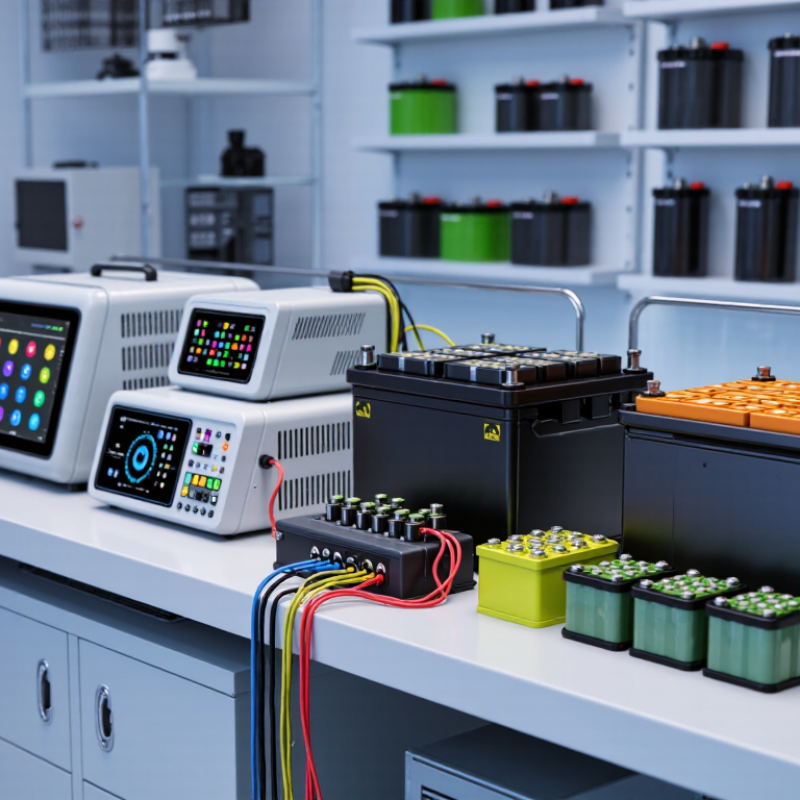
Battery Tester Categories for Primary Cells, Rechargeables, and EV Packs
Battery testers differ sharply by battery category, so global buyers should match the instrument to the chemistry and application. Primary-cell testers usually measure voltage, load response, leakage, and remaining capacity. They suit alkaline, lithium, and other non-rechargeable cells. A stable contact fixture matters because loose terminals can create false readings. Simple displays help operators work quickly, but basic meters may miss voltage recovery after load removal.
Rechargeable-cell testers need broader control. Look for adjustable charge and discharge currents, cycle testing, temperature monitoring, and protection against overcharge. Lithium-ion, nickel-metal hydride, and lithium iron phosphate cells require different test profiles. A professional system should record capacity, internal resistance, cycle count, and test time. Data export is valuable for audits and supplier comparisons. Still, software is not always perfect. I have seen clean-looking reports hide poor cable connections and unstable room temperatures.
EV pack testers belong in another class. They must support high-voltage isolation, controlled load handling, cell-level monitoring, and emergency shutdowns. Buyers should check measurement accuracy, calibration records, safety interlocks, and compatibility with pack communication protocols. Service access also matters when equipment crosses borders. Spare probes, training, local repair support, and clear manuals can prevent long delays. Test results should be traceable to defined procedures, not only displayed as a pass or fail. A tester may be technically advanced yet unsuitable for a small workshop.
Key Specifications: Voltage, Current, Capacity, C-Rate, and ±0.1% Accuracy
Top Battery Testers: What Should Global Buyers Look For?
Global buyers should treat a battery tester as a measurement instrument, not a screen with wires. The International Energy Agency reported that electric vehicle battery demand exceeded 750 GWh in 2023, rising about 40% year on year. That scale makes repeatable testing commercially important. A practical tester should cover the pack’s maximum voltage with safety headroom. It should also measure charge and discharge current accurately.
Capacity must be recorded in ampere-hours and watt-hours. C-rate links current to battery size; a 2 Ah cell tested at 1C needs a 2 A current. Check whether the system supports constant-current, constant-power, and pulse profiles. A ±0.1% accuracy claim is useful only when the supplier defines its reference. Ask whether it means full-scale or reading accuracy. At 100 A, 0.1% full-scale equals 0.1 A. That difference matters.
The U.S. Department of Energy’s Battery Manufacturing and Recycling Grants overview stresses reliable process data for scaling battery production. In real laboratories, cables, thermal drift, and software timing can weaken impressive specifications. Technicians should request calibration certificates, traceability, sampling rates, and test reports using known reference loads. Test the tester under warm conditions too. A perfect datasheet is not a perfect test. Some buyers overlook recovery time after a protection trip, and that is an avoidable mistake.
Chemistry Compatibility: Li-Ion, Ni-MH, Lead-Acid, and IEC 62133-2
Global buyers should treat chemistry compatibility as a core purchasing requirement, not a checkbox. A Li-ion tester needs accurate voltage limits, charge control, and protection checks. Ni-MH batteries require different charging behavior and discharge evaluation. Lead-acid units demand higher current capacity, temperature awareness, and reliable readings under heavy loads. One instrument rarely handles every chemistry equally well. That matters.
For lithium batteries, ask whether the tester supports the relevant IEC 62133-2 test procedures. This standard addresses safety requirements for portable secondary lithium cells and batteries. A tester can support verification workflows, but it cannot make a battery compliant by itself. Buyers should review test parameters, current ranges, software records, and calibration certificates. Clear operating manuals also matter when teams work across different countries.
In practical bench testing, small setup errors can change results. Loose terminals, warm cells, or an unsuitable discharge rate may produce misleading data. Even experienced operators can trust a clean pass too quickly. I would check repeatability with reference batteries and compare results across several cycles. The best equipment records voltage, current, temperature, and timing clearly. It should also prevent accidental use of a lithium profile on a Ni-MH or lead-acid battery. Safety comes before speed.
Safety Compliance with UN 38.3, IEC Standards, and ISO/IEC 17025
Global buyers should treat battery testing as a safety decision, not merely a purchasing formality. A credible laboratory should provide evidence of UN 38.3 testing for batteries shipped by air, sea, or road. The report should identify the exact cell or battery model, configuration, sample condition, and test date. Small details matter.
UN 38.3 covers transport-related hazards, including vibration, shock, altitude simulation, temperature cycling, and external short circuit tests. Buyers should also check relevant IEC standards for electrical, mechanical, and performance safety. The correct standard depends on the battery type and intended application. A laboratory must explain this choice clearly. Generic claims are weak evidence.
ISO/IEC 17025 accreditation adds confidence in laboratory competence and measurement control. Ask whether the accreditation scope includes the required battery tests. Review calibration records, uncertainty statements, test methods, and corrective-action procedures. Experienced buyers may also request raw data or photographs of damaged samples. Reports can look polished yet remain incomplete. I would not rely on a certificate alone. One overlooked configuration can change the risk assessment. Testing should follow a traceable process, from sample receipt to final report. This may feel slower, but it protects procurement decisions and downstream users. Even competent laboratories can make mistakes, so independent technical review remains valuable.
Global Buying Criteria: Throughput, Calibration, Data Integrity, and Total Cost
Global battery buyers should judge testers by daily throughput, not impressive peak specifications. A useful system completes the required charge and discharge cycles without creating long queues. Check channel count, fixture changes, thermal control, and recovery after a failed test. In a busy laboratory, ten idle channels can cost more than a slower instrument. I once focused too heavily on maximum current. That assumption was wrong. Stable operation mattered more than occasional speed.
Calibration deserves equal attention. Ask for traceable certificates, adjustment intervals, and uncertainty data for voltage, current, and temperature. A tester showing 4.200 volts may still produce unreliable results if its sensors drift. Practical teams should compare readings with a trusted reference during routine checks. Small errors become expensive when hundreds of cells are screened. Calibration records should be easy to retrieve.
Data integrity is not just a software feature. Look for automatic timestamps, user permissions, audit trails, secure backups, and exportable raw data. A disconnected network should not erase a week of cycling results. Test the recovery process before purchase. It may fail. Total cost includes fixtures, cooling, software licenses, calibration, training, electricity, and service response. A low purchase price can hide recurring expenses. Buyers should request a three-year cost estimate using their actual test schedule, not a supplier’s ideal workload.