How to Choose the Best Mining Excavator for Your Project?
Choosing the best Mining excavator for your project is a critical decision. The right machine can significantly impact productivity and operational efficiency. Recent industry reports indicate that demand for mining excavators is on the rise, with a growth rate expected to reach 5.6% annually until 2025. This trend highlights the need for informed choices in equipment selection.
Mining excavators differ in capabilities, specifications, and applications. Selecting the wrong model can lead to increased operational costs and downtime. For example, a heavy-duty excavator may be essential for large-scale operations but unsuitable for smaller projects. Understanding the nuances of each excavator type is vital.
Moreover, factors such as fuel efficiency, maintenance costs, and adaptability to different terrains should be considered. Decisions should be based on reliable data and expert insights. Without careful evaluation, projects may face unexpected challenges. Balancing cost and functionality is crucial for successful operations. Remember, the right mining excavator not only enhances productivity but also ensures safety and compliance with industry standards.
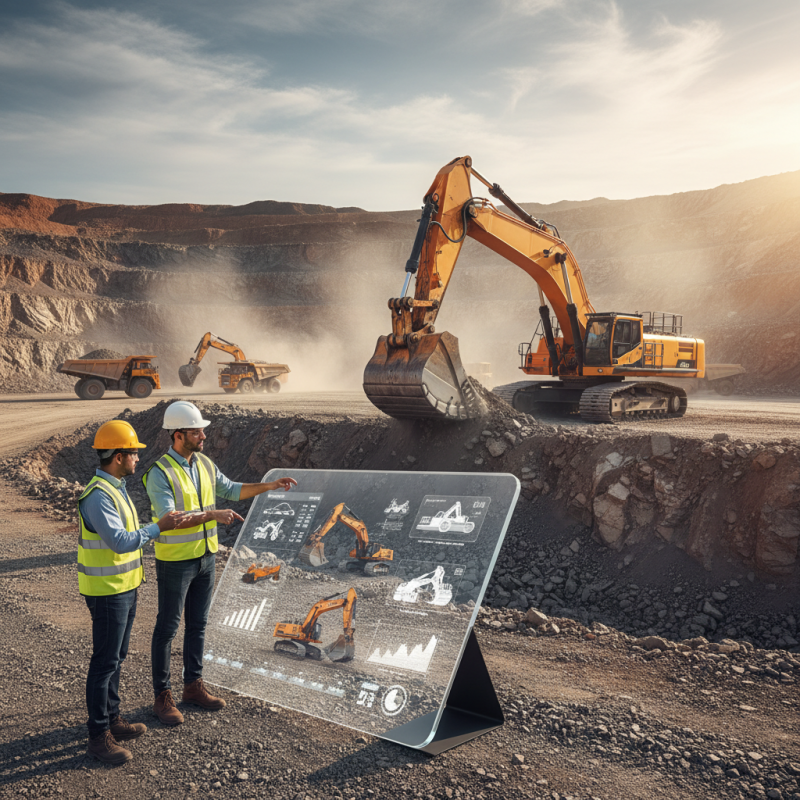
Understanding Your Project Requirements for Excavation
When choosing a mining excavator, understanding your project requirements is crucial. The size of the excavation area plays a significant role. Larger projects typically require more powerful excavators with greater capacities. However, selecting an oversized machine can lead to inefficiencies and increased operational costs. It's essential to strike a balance.
Another critical factor is the type of material being excavated. Different materials, like soil, rock, or clay, demand different approaches. A machine built for heavy rocks might struggle with softer materials, leading to operational delays. Knowing the material specifics will guide your choice of attachments and capabilities.
Don't overlook the terrain where the excavation will occur. Steep or uneven surfaces can complicate operations and require specialized equipment. Reflect on your site conditions and the potential obstacles. Sometimes, lesser-known machines perform better in specific environments. Thoroughly assessing these elements ensures that your excavation projects run smoothly and meet expectations.
Types of Mining Excavators and Their Applications
When selecting a mining excavator, it's crucial to consider the different types available and their specific applications. Hydraulic excavators are prevalent in mining projects due to their versatility. They can handle various tasks such as digging, loading, and material handling. In fact, according to a recent industry report, 70% of mining companies prefer hydraulic models.
Another common type is the dragline excavator. These machines are ideal for large-scale operations like coal mining. They can move massive quantities of earth quickly. Their ability to reach great depths makes them perfect for surface mining projects. Studies show that draglines can increase operational efficiency by up to 30%.
Tips: Focus on your project's unique requirements when choosing an excavator. Analyze workload, terrain, and materials. For smaller operations, a compact excavator might be more cost-effective and efficient.
Additionally, consider the operational costs associated with different models. While a more powerful machine may seem appealing, it could lead to higher fuel and maintenance expenses. Reflect on the long-term implications rather than just the initial investment, as every project demands careful planning.
Comparison of Mining Excavator Types Based on Applications
Key Features to Consider When Selecting an Excavator
When selecting the best mining excavator, consider its size and weight. A larger machine can handle hefty payloads but may struggle in tight spaces. Weigh the site's accessibility. Cramped locations may require a smaller, more agile excavator. Assessing these dimensions is crucial for operational efficiency.
Next, examine the excavator's fuel efficiency. High fuel consumption can lead to increased operating costs over time. Look for models that offer energy-efficient options. Also, consider the excavator's digging depth and reach. Depending on your project needs, some tasks may require deeper digs or extended reach.
Choose a model that aligns well with your project specifications.
Another important factor is the ease of maintenance. A complex machine may require specialized tools or training for repairs. This could lead to downtime and increased expenses. Evaluate user reviews and expert opinions on maintenance aspects. Reflect on your team's skill set and how it matches with the excavator’s requirements.
Ensure your choice provides a balance between performance and manageability.
Evaluating Excavator Performance and Efficiency
When choosing a mining excavator, performance and efficiency are key factors to consider. According to a report by the International Council on Mining and Metals, excavators account for approximately 15% of a mining fleet’s total capital expenditures. This substantial investment necessitates a thorough evaluation of various performance metrics. Look at the machine's dig depth, reach, and cycle times. Understanding how these elements influence productivity can significantly impact your project timeline.
Tip: Always request a demo to observe the excavator in action. Live demonstrations provide valuable insights into its operational speed and digging capabilities, allowing for real-world performance evaluations.
Efficiency is equally critical. A study by the American Society of Civil Engineers indicates that integrating modern hydraulic systems can enhance fuel efficiency by up to 30%. Machines equipped with advanced technologies reduce idle time and improve power management, leading to lower operational costs. Keep in mind, not every excavator will deliver peak efficiency in every scenario, so it's worth considering your specific project demands.
Tip: Analyze fuel consumption data alongside operating costs. This information aids in making a balanced decision based on expected outputs and budget constraints.
How to Choose the Best Mining Excavator for Your Project? - Evaluating Excavator Performance and Efficiency
| Excavator Model | Operating Weight (tons) | Bucket Capacity (cubic meters) | Engine Power (HP) | Fuel Efficiency (liters/hour) | Max Digging Depth (meters) | Operating Range (meters) |
| Model A | 30 | 1.5 | 200 | 12 | 6 | 9 |
| Model B | 35 | 1.8 | 220 | 13 | 6.5 | 10 |
| Model C | 28 | 1.6 | 180 | 10 | 5.8 | 8 |
| Model D | 40 | 2.0 | 250 | 15 | 7 | 11 |
Budgeting and Cost Considerations in Excavator Selection
When selecting an excavator for mining purposes, budgeting is crucial. Industry reports indicate that the average cost of a mining excavator ranges from $100,000 to $500,000. Prices fluctuate based on size, capacity, and features. A compact machine may suit small projects but won't handle heavy loads efficiently. Therefore, it's essential to match your budget with project requirements.
Consider the ongoing operational costs. Fuel consumption, maintenance, and parts replacement are significant factors. Excavators can consume up to 15 gallons of fuel per hour. Companies often overlook these recurring expenses. They may budget heavily for initial purchase costs but then struggle with unforeseen maintenance needs.
Research indicates that about 20% of projects exceed their budgets due to equipment failures. This statistic highlights the need for long-term planning. Understand your project’s timeline and potential downtime costs. Investing in a high-quality excavator may seem expensive upfront. However, it can save money in the long run through reliability and efficiency. Balancing initial costs with future operations is key to successful budgeting in excavator selection.