
China Top 10 Power Inverter For Home Suppliers
Choosing a Power Inverter For Home is not simply a comparison of wattage and price. A dependable unit must handle real household conditions. Think about refrigerator startup surges, sensitive laptops, LED lighting, and battery charging during cloudy afternoons.
This guide examines China’s top 10 Power Inverter For Home suppliers through practical criteria. These include continuous output, surge capacity, pure sine wave performance, conversion efficiency, protection features, warranty support, and manufacturing consistency. Supplier experience also matters. A factory may offer impressive specifications, yet after-sales service can remain unclear. That deserves attention.
Energy strategist Amory Lovins once said, “The best energy is the energy you don’t use.” His point applies directly here. Lower idle consumption and efficient conversion can reduce wasted battery power every night. However, efficiency figures are not enough. Buyers should verify test conditions, operating temperature, battery compatibility, and certification documentation.
No ranking is perfect. Real performance depends on installation quality, load patterns, climate, and maintenance. A model that suits a small apartment may disappoint in a rural backup system. Some supplier information may also change quickly. That is why this overview balances published specifications with practical concerns, rather than treating marketing claims as final proof. Readers should confirm current datasheets, factory audits, and local service arrangements before purchasing. Small details matter, especially when the lights go out.
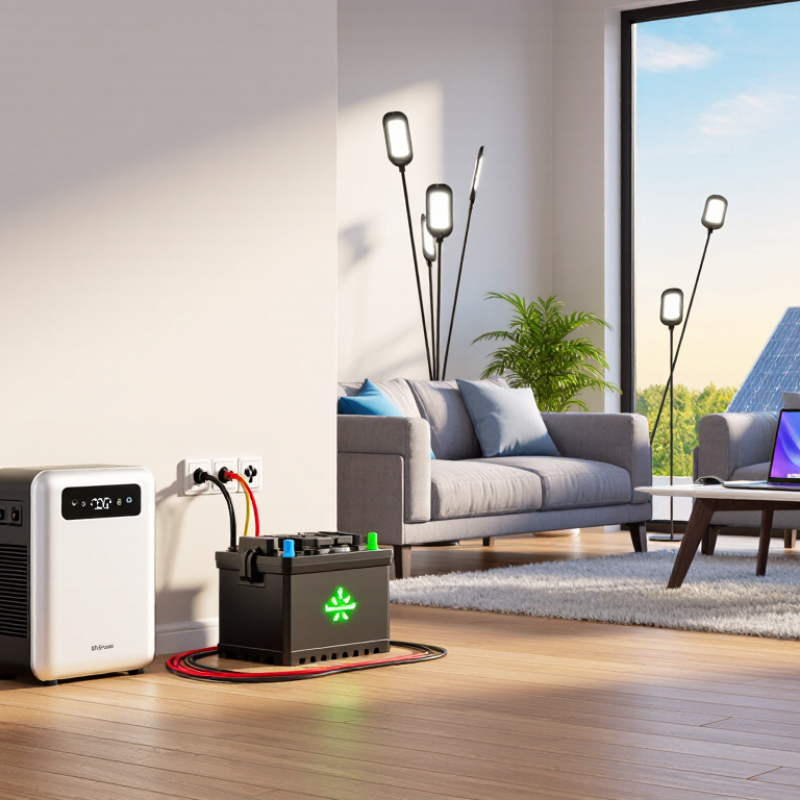
What Are Home Power Inverters and How Do They Work?
A home power inverter is the control center between solar panels, batteries, and household appliances. Solar panels produce direct current, or DC. Most home devices use alternating current, or AC. The inverter changes DC into usable AC, while monitoring voltage, frequency, temperature, and fault conditions. Some hybrid models also manage battery charging and backup power during an outage.
The market is expanding quickly. The IEA Photovoltaic Power Systems Programme reported about 456 gigawatts of new solar capacity worldwide in 2023. That growth increases demand for reliable residential conversion equipment. In practical use, a quality inverter should maintain stable output when clouds pass over the roof. It should also disconnect safely when grid conditions become abnormal. Modern models often reach conversion efficiencies above 97%, although real household performance can be lower after wiring, heat, and standby losses.
Small details matter. A shaded panel can reduce the output of a whole string in some system designs. Monitoring software may reveal this before a homeowner notices higher electricity bills. Battery-ready inverters provide more flexibility, but they add cost, weight, and installation complexity. I have found that buyers sometimes focus only on peak wattage. That is incomplete. Surge capacity, cooling design, warranty support, protection ratings, and certified installation deserve equal attention. No inverter is perfect. A realistic assessment should include local sunlight, appliance starting loads, battery goals, and the limits of the home’s electrical system.

Key Criteria for Evaluating Chinese Home Inverter Suppliers
Choosing among China’s top home inverter suppliers requires more than comparing prices and power ratings. Start with technical fit. Check continuous output, surge capacity, conversion efficiency, battery compatibility, and protection against overheating. A 5 kW label means little without a clear test condition. Ask for test reports, product drawings, and certification records relevant to your market.
Documents matter. Ask for evidence.
Supplier reliability also depends on manufacturing control. Review factory audit results, incoming component checks, final inspection records, and serial-number traceability. A capable supplier should explain how each unit is tested before shipment. Request a sample and test it with realistic loads, such as a refrigerator, pump, and several lights. Observe noise, temperature rise, display accuracy, and restart behavior after a power interruption.
Test the basics.
Communication is another practical measure. Engineers should answer wiring, firmware, and battery questions with specific data, not general promises. Examine warranty terms, spare-parts availability, remote troubleshooting, and response times. Clear manuals in accurate English reduce installation mistakes. Be cautious when a supplier refuses independent inspection or changes specifications between samples and bulk orders. I have found that attractive quotations can hide weak service assumptions. Even a technically sound inverter may become costly if replacement parts arrive slowly. Some evaluation gaps are unavoidable, so record open questions and request written clarification before placing an order.
China’s Top 10 Power Inverter Suppliers for Residential Use
China’s leading residential inverter suppliers typically serve apartments, villas, and small backup systems. Their products often range from 1kW to 10kW, covering lighting, refrigerators, routers, and water pumps. Experienced installers check the inverter’s continuous output, surge capacity, waveform, and battery compatibility before discussing price. A quiet fan matters in a bedroom. So does a clear display.
Reliable suppliers should provide test reports, traceable serial numbers, installation manuals, and responsive technical support. Buyers should verify compliance with the electrical standards required in their destination market, including grid connection and electromagnetic compatibility rules. In practical projects, a pure sine wave output protects sensitive electronics more effectively than cheaper alternatives. Remote monitoring can also reveal battery faults, overloads, or unusual temperature rises.
Small details expose weak suppliers. Ask how they handle warranty claims, replacement parts, firmware updates, and transport damage. Some sales teams promise fast delivery but explain little about after-sales service. That deserves caution. I would also request a sample unit and test it under realistic loads, not only a desk lamp. A refrigerator may draw several times its rated power during startup. Supplier rankings can change quickly, and published specifications are not always complete. Independent inspection remains worthwhile.
Comparison of Products, Technologies, Prices, and Certifications
Comparing China’s top ten home power inverter suppliers requires more than reading capacity labels. Product quality depends on waveform, efficiency, cooling design, and battery compatibility. Pure sine wave models protect sensitive appliances, including refrigerators and medical equipment. Hybrid inverters add solar charging and grid backup. Off-grid units usually need stronger battery management. Check continuous output, not only peak wattage. A 5,000-watt label may hide a lower long-term rating.
Technology differences affect daily performance. MPPT charging can improve solar harvest during changing sunlight. Some models offer transfer times below 20 milliseconds, which helps keep routers and computers running. Others provide mobile monitoring, programmable charging, and overload protection. I would also inspect fan noise, idle consumption, and enclosure ventilation. These details are easy to overlook. They matter at night.
Prices often range from under 200 to above 2,000 US dollars, depending on power, batteries, and control features. A cheaper inverter may exclude cables, installation parts, or a reliable warranty. Certification checks should include CE, UKCA, RoHS, and relevant IEC test reports. Verify that certificates match the exact model, factory, and rated voltage. ISO registration can support manufacturing consistency, but it does not prove inverter performance. One weakness in many comparisons is treating certification as a quality guarantee. It is evidence, not a complete answer. Ask for efficiency curves, protection tests, service terms, and replacement-part availability before judging value.
China Top 10 Power Inverter for Home Supplier Product Profiles
Comparison of typical rated power, peak efficiency, indicative prices, technologies, and certification coverage
The chart compares ten common residential inverter configurations available from Chinese manufacturers. Values are indicative market ranges based on typical publicly listed specifications: prices are estimated USD retail/export ranges, while efficiency varies by load, battery voltage, waveform, cooling design, and operating mode. Certification references commonly include CE, RoHS, IEC, and UN38.3 where applicable.
How to Choose the Right Chinese Home Inverter Supplier
Choosing the right Chinese home inverter supplier requires more than comparing catalog prices. Start with your household’s actual load: refrigerators, pumps, lighting, computers, and heating equipment behave differently. Ask for continuous power, surge capacity, output waveform, efficiency, and battery compatibility. A low-priced unit may struggle when a motor starts.
Request current test reports, safety certifications, factory quality procedures, and clear production records. Documents should match the exact model, not a similar product. Check whether the supplier understands your destination’s voltage, frequency, grid rules, and installation requirements. Technical answers should be specific. Vague promises are warning signs.
Look closely at warranty terms and after-sales support. Can the supplier provide wiring diagrams, fault codes, spare parts, and remote troubleshooting? Ask how long replacement components remain available. A reliable supplier should explain both strengths and limitations without pressure. During evaluation, test sample units under realistic loads, including sudden motor starts and low-battery conditions. Test twice.
Many buyers focus too heavily on factory appearance or attractive brochures. That can be misleading. A clean showroom does not prove stable production. Review several shipment records, inspect random units, and use an independent quality inspection when order value is significant. Keep communication in writing, including tolerances, delivery dates, packaging details, and repair responsibilities. Small omissions often become expensive disputes.
| No. | Evaluation Dimension | Recommended Benchmark | Evidence to Request from the Supplier | Why It Matters |
|---|---|---|---|---|
| 1 | Output Waveform | Pure sine-wave output for sensitive household electronics, motors, appliances, and medical equipment. | Product datasheet showing waveform type, total harmonic distortion specification, and an independent test report where available. | Pure sine-wave power generally provides cleaner AC power and reduces compatibility risks. |
| 2 | Rated Power and Surge Capacity | Select continuous output based on the total load, with additional capacity for refrigerator, pump, air-conditioner, and other motor-starting loads. | Continuous power, peak or surge power, surge duration, overload curve, and test conditions at the declared rating. | Motor-driven appliances can require substantially more power during startup than during normal operation. |
| 3 | Input and Output Compatibility | Confirm the required battery voltage, AC voltage, frequency, connector type, and regional grid configuration before ordering. | Electrical specification sheet, wiring diagram, selectable frequency settings, and country-specific user manual. | China commonly uses 220 V and 50 Hz, while destination markets may require different voltage, frequency, or plug configurations. |
| 4 | Inverter Topology and Operating Mode | Choose an off-grid, grid-tied, or hybrid configuration according to whether backup, solar self-consumption, export, or battery charging is required. | Functional block diagram, operating-mode list, transfer logic, grid-interconnection documentation, and compatibility list. | Different inverter types have different installation rules, protection requirements, and permitted grid functions. |
| 5 | Efficiency and Standby Consumption | Compare peak efficiency, efficiency at typical household loads, and no-load or standby consumption rather than relying on a single maximum figure. | Efficiency curves, test conditions, rated-load data, standby consumption, and thermal derating information. | Higher practical efficiency reduces battery energy loss, heat generation, and operating cost. |
| 6 | Safety and EMC Compliance | The product should have documentation appropriate for the destination market, including applicable electrical safety and electromagnetic-compatibility requirements. | Valid test reports and certificates referencing applicable standards such as IEC 62109-1, IEC 62109-2, and relevant EMC standards. | Verified compliance helps reduce electrical, fire, interference, customs, and installation risks. |
| 7 | Protection Functions | Look for over-temperature, overload, short-circuit, over-voltage, under-voltage, reverse-polarity, and low-battery protection where applicable. | Protection list, alarm codes, shutdown thresholds, recovery behavior, and installation requirements. | Comprehensive protection improves user safety and can limit damage caused by abnormal operating conditions. |
| 8 | Battery and Solar Compatibility | Verify compatibility with the chosen battery chemistry, battery-management communication protocol, charge voltage, PV voltage range, and maximum charging current. | Battery compatibility matrix, CAN or RS485 protocol details, MPPT voltage range, maximum PV input, and commissioning instructions. | Incorrect charging parameters or communication settings may reduce performance or create safety problems. |
| 9 | Factory Quality Control and Traceability | Prefer suppliers able to provide production testing, serial-number traceability, incoming-component control, and documented corrective actions. | Quality-management certificate, sample inspection report, burn-in procedure, calibration records, and batch traceability process. | Documented quality systems make product consistency easier to verify and after-sales problems easier to resolve. |
| 10 | Warranty, Support, and Total Cost | Compare warranty duration, spare-parts availability, firmware support, response time, MOQ, lead time, Incoterms, and landed cost. | Signed warranty terms, service-level commitments, replacement procedure, spare-parts price list, firmware policy, and complete quotation. | A lower purchase price may be outweighed by installation complexity, downtime, freight, replacement parts, or limited technical support. |
| Selection note: Treat the benchmarks above as a supplier-comparison framework. Confirm all ratings, certifications, grid-interconnection rules, and installation requirements against the latest product documentation and the regulations of the destination country. | ||||
